

Faith, Fear, and Fun: Wrestling With Religion and Dark Video Games
I’ve been thinking a lot lately about the games I’ve been playing recently, and more importantly, how they make me feel.
Not just the jump scares or the thrill of a good puzzle, but the deeper, quieter feelings that sit with me after I put down the controller, we have all had that feeling.
It’s especially tricky when the games I really enjoy dip into themes of rituals, the occult, or buckets of gore.
And now I find myself asking… if it is okay that I enjoy these things, games?
Now I know that this is a very heavy topic and not very often spoken about by many content creators, due to the heavy nature and uninvited hate it can bring in the comment section.
However, it is something that has been waiting very heavily on my heart. So the question that popped up was, am I being honest with my beliefs? Am I setting a bad example for my viewers by playing games this violent and gory?
So with this next article, I wanted to dive deeper into my feelings, maybe not just my own, maybe yours as well.
I don’t have a clear answer, but maybe that’s why I’m writing this. To start a conversation. Not just between me and myself, but between me and you.
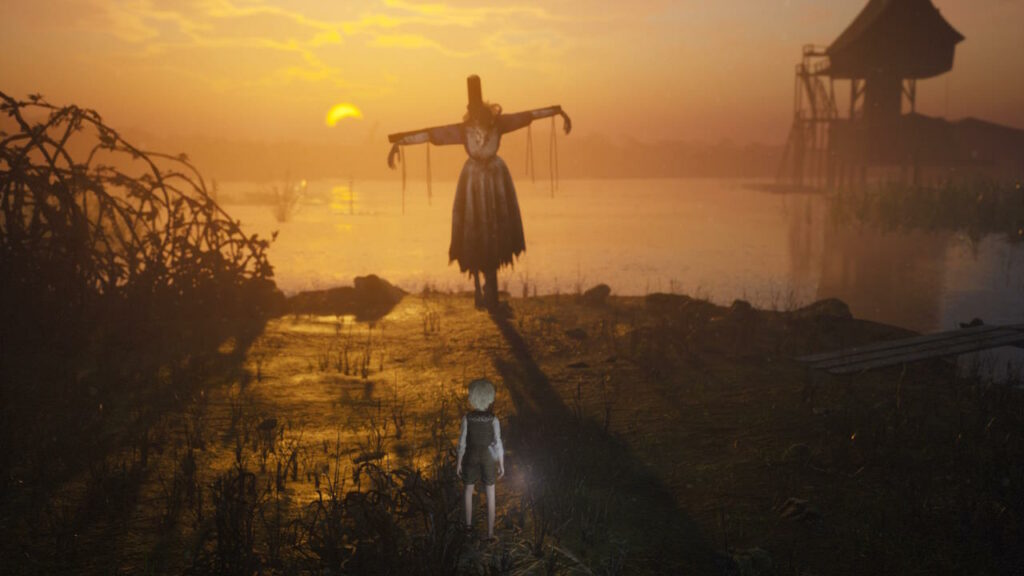
Take Bramble: The Mountain King, for example. The game that really got me thinking… It’s hauntingly beautiful, as I previously stated in my other article.
The art, the music, the storytelling—it’s an incredible experience. But it’s also deeply dark. The game dives into folklore that’s full of twisted rituals, grotesque imagery, and terrifying creatures, like something really scary monsters truly out of a fairy tale.
SPOILER AHEAD:
While I enjoyed the experience of the game, I found myself uneasy about what I was participating in. As I previously said, I enjoyed the game; it was a good game, but as a first-time mom, chasing down a mom who planned to sacrifice her baby and in the end failing to save them both, just sits very wrong with me… I could hardly speak as I was watching the scene unfold.
Should I have entertained a game that was so dark and so grim? Or is it okay to appreciate the artistry and still feel discomfort with the story behind it?
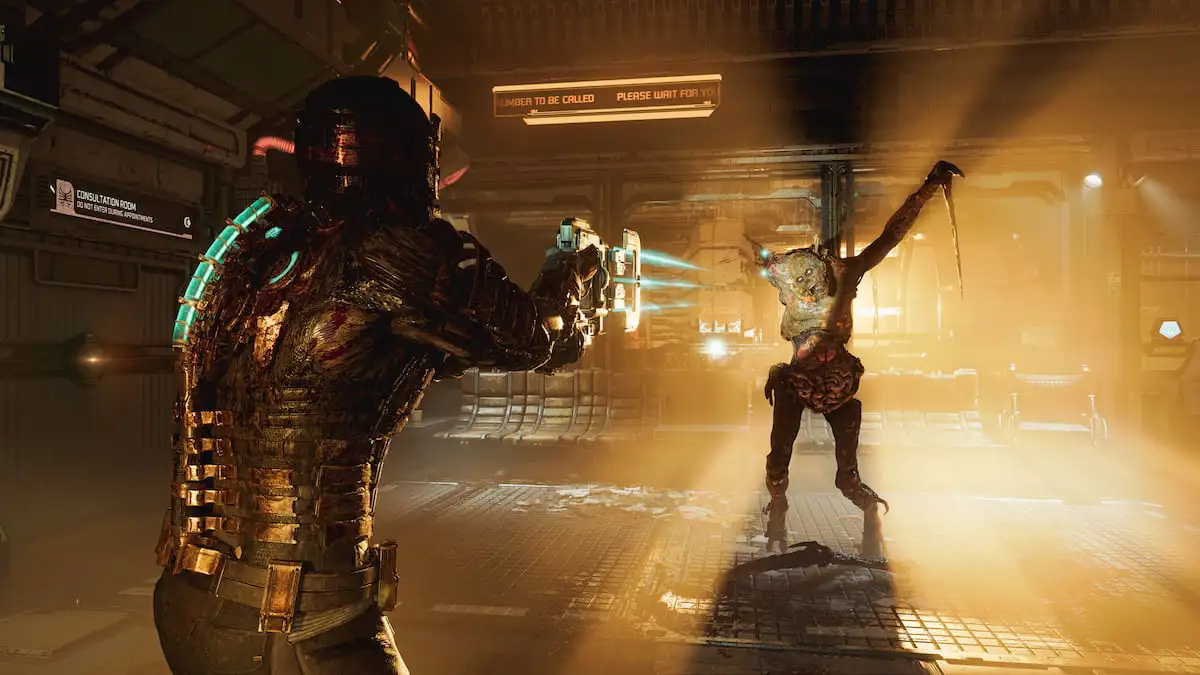
Then there’s Dead Space—a game I played because, let’s be real, it’s just scary fun.
The atmosphere is masterfully done, and there’s nothing quite like walking through an abandoned spaceship while your heart pounds from the sound design alone. The atmosphere this game creates purely through the music is fantastic, making it feel like someone is constantly breathing down your neck.
But at the heart of it, there’s a lot of religious symbolism twisted into horror. The “Church of Unitology” mirrors real-world faiths in disturbing ways. And again, I ask myself—is it okay that I’m playing this and maybe even enjoying the fear it stirs?
I mean, let’s look at my past experience, the game was mostly played because I thought it could be good content for my community.
Was it? I am not sure because I don’t scream or yell at games, instead I shake my mouse or let out a gasp… OR I get stuck in a chapter for hours, which was meant to be completed in 30 minutes.
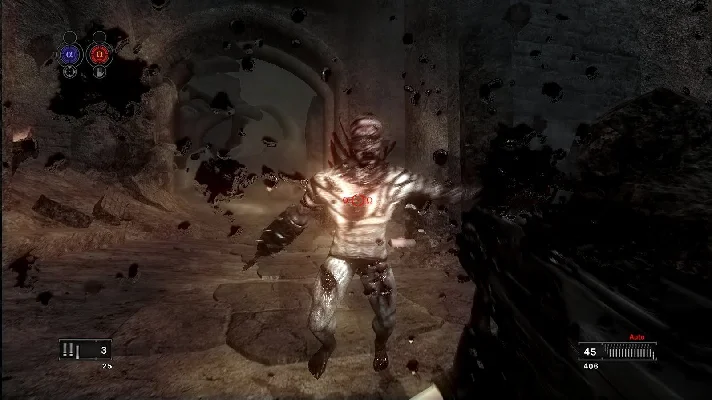
But the most complicated of them all is a game I played when I was much younger, alone at home—Clive Barker’s Jericho. That one stuck with me.
I probably shouldn’t have played it at the age I did, and to nobody’s fault but my own, as I rented the game at a DVD store when my parents both worked night shift.
Somehow, I remember the thrill of sneaking it in, knowing I was going to play something intense, scary, and something that would have probably gotten me grounded for life, should it have been discovered.
Jericho is full of religious references, blood rites, and uncomfortable themes, dark and twisted. I didn’t understand all of it back then, but now I wonder how much it shaped the way I view horror and religion in games, and I cannot wonder if it should be something I should try again to get some of my answers answered.
I mean, I never got to finish the game because it was a one-day rental only, but I still recall there was a playable character that would cut herself to unlock her powers… back then, that is where I stopped. Not truly understanding what I played but at such a young age I knew it is wrong.

This feeling isn’t limited to gore-fests. Even my favorite games challenge me in unexpected ways.
Take Dragon Age, for example. I love-love-love the series.
The story is rich, the characters unforgettable, the combat fun, and it was all just a wonderful new experience for me.. But it’s also filled with questions about gods, corruption within religious institutions, the role of belief in war, and the personal cost of faith.
The Chantry, the Maker, the Templars—it’s all fictional, yet eerily familiar. I find myself agreeing with characters who question everything, and that makes me wonder: is that shaping how I view things in the real world?
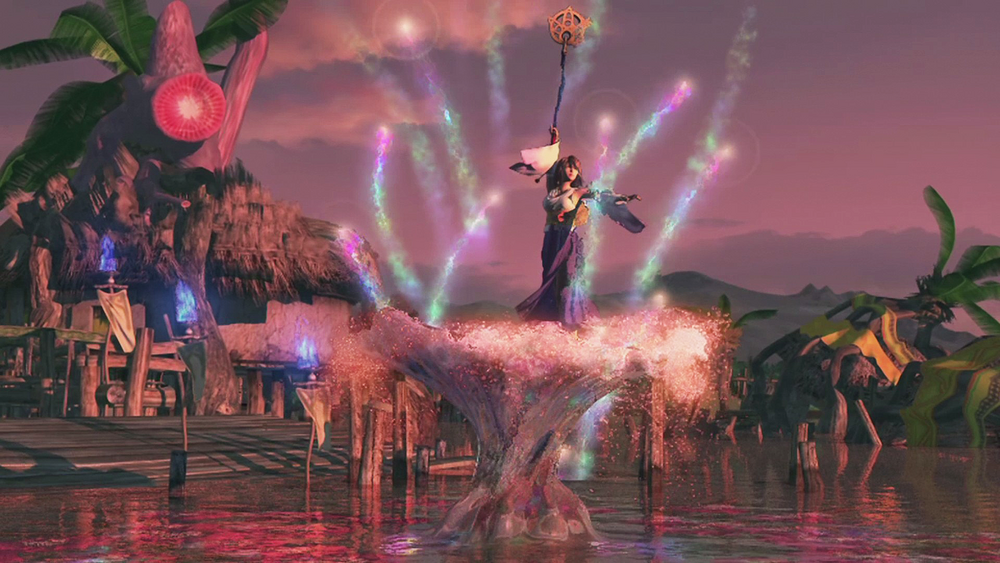
And then there’s Final Fantasy X—a game that absolutely owns a piece of my heart.
It’s colorful, emotional, and nostalgic, and I just have happy memories of this game… times where I would beg my parents to go and visit a family member so I could borrow it and play it for the weekend.
But at its core, it’s about a religion that’s built entirely on a lie. The teachings of Yevon bring comfort, but also control to some in the game.
Watching Yuna’s journey, believing, doubting, then finally choosing her own path—hit me in ways I still don’t fully know how to unpack. It’s beautiful. It’s heartbreaking.
And it made me ask myself what I truly believe in.
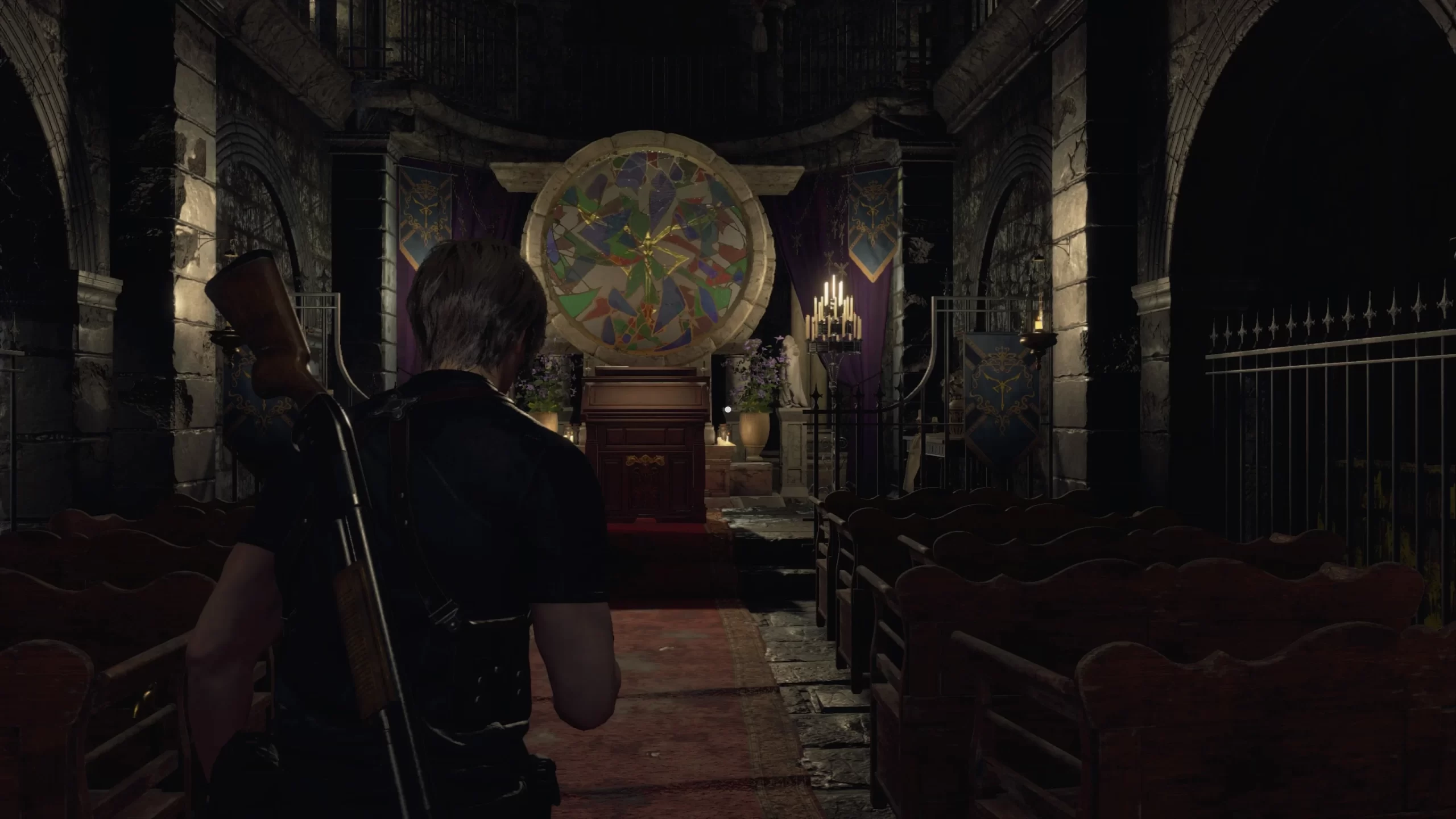
And then there is the classic Resident Evil, with all its zombies and viruses, that dances with themes of faith, sin, and salvation.
Whether it’s the Ashford family’s god complex or the bioweapons treated as a form of divine punishment, there’s often a deeper layer beneath the horror—and it’s one that taps into something spiritual, even if just nearly.
I mean, to this day, I cannot bring myself to finish Resident Evil 4, but I play Resident Evil 5 over and over again.
So now the questions are becoming more frequent … what am I supposed to do with all this?
What presently awakened all these questions in me was when I was explaining the story of Bramble to my boss, and a team member overheard us talking. She innocently asked, why would I choose to play something so dark, and that she could never let her kids around something like that…
It got me thinking… Am I a bad mom? Am I a bad person for pushing the boundaries of my beliefs when I play something dark and tormented? OR Does playing these games mean I’ve lost touch with my beliefs?
I am conflicted, and a lot of you may say, “Hey, who cares, play what you want”.
So let’s chat, tell me what you are thinking. I’ve asked a lot of questions; let’s find the answers.

And finally, am I influencing others the wrong way when I share these games on stream or even write about them?
When writing this, I don’t think it’s about having all the answers, and I am eagerly inviting you all to talk to me about this one. I think it’s about being willing to ask the questions.
To not just consume media, but to reflect on it. Maybe it’s okay to enjoy these games, because we’re self-aware. Because we’re asking, “What am I learning from this? How does it make me feel? What do I take from it?”
For me, faith isn’t about hiding from the world. It’s about navigating it thoughtfully. Maybe these games aren’t a betrayal of belief, but a mirror to it. A way to explore fear, hope, doubt, and meaning through a different lens.
Now I am no saint, and I know some of you reading this will be shocked, because as mentioned before, it’s a heavy topic to address; however, somehow by writing this and opening myself up to you all, I feel comfortable enough in doing so…
What do you think?
Have you ever played a game that made you question your values, or even deepened them, and if you did… What was that game?
Lots of Love

Love what I do?
Consider donating to help keep the blog running. I appreciate every contribution to help me grow!!



Some will just see it as “those evil games trying to corrupt your views on faith” but I don’t think that’s the case at all. I like to think of these tales of faith and religion in games as cautionary tales of how it can be used for ill will. And that it does mirror some of the real world controversies. If it does make feel one something when playing them I think they succeed in driving their message across.
There’s definitely nothing wrong with enjoying media with dark themes. You’re reflecting on them and not doing similar actions yourself. Even Kirby has similar themes in a more subtle way.
Games of this matter is a big source of comfort and relevance for a large group of people. Its a way for them to feel powerful in a world that made them feel weak. Its a way for them to get rid of what is hiding inside in a world where they may see things in the same light they see themselfs a monster.
Regarding the themes in the games you have mentioned. In my opinion it does have a place in the world as its a way to see how bad things can be hidden in good intentions. How people can use something wonderful for horrible intentions. Its can shows you things that have been used in the past and how to see them if you ever do encounter it.
In the world you must question things as people have misused blinded trust in all shapes and forms. It’s also how we learn and understand more things about ourself and the wolrd but this more of a personal idea of mine. Asking questions stops the hate and anger to the unknown and brings understanding and peace towars the subject
Games of this matter is a big source of comfort and relevance for a large group of people. Its a way for them to feel powerful in a world that made them feel weak. Its a way for them to get rid of what is hiding inside in a world where they may see things in the same light they see themselves a monster.
Regarding the themes in the games you have mentioned. In my opinion it does have a place in the world as its a way to see how bad things can be hidden in good intentions. How people can use something wonderful for horrible intentions. Its can shows you things that have been used in the past and how to see them if you ever do encounter it.
In the world you must question things as people have misused blinded trust in all shapes and forms. It’s also how we learn and understand more things about ourself and the world but this more of a personal idea of mine. Asking questions stops the hate and anger to the unknown and brings understanding and peace towards the subject
Hey Sephiroth58,
Thank you for reading :)
That’s a very interesting way to look at it.
I’ve always been super curious about what the thought process was behind making the game’s story, especially this one. Goodness, imagining that someone might be hiding dark themes within themselves (if that makes sense) is a very scary thought.
But the game was beautiful, the idea of it was dark and a bit unsettling for me, but I guess everyone expresses themselves differently and takes what they feel is important from the game.
I hope I get to play more games like this in the future so it helps me question and learn more about the world and other people.
Lots of love
Azzy
I am sorry to be the one that says this but that is more common than you think. I am not saying it because i want to make you negative or change your view of the world and or people. the thing is most people who want others just to laugh and have fun are the the ones that are sad. the people who want to protect are the ones that have darkness inside them. unfortunately the inverse is also there. the people who judge the most are the most insecure. the people who starts fights are the most scared. its just a matter of control and how its implemented. Something i have always believed in is the difference between badman and the joker is just one bad day. that’s all it can take sometimes.
Games like that they work as a control. A small release where no one knows what is truly there. you can look at thing you understand without being judged. you learn about concepts or change the way you think about things as you get to see it from a different view point.
Something i was taught is “art can be a source of solace for those facing hardship while also challenging those who are content with the status quo. This concept is attributed to Cesar A. Cruz,”